


One in Christ
31 May 2026
Alexander Chow
Introduction
It is wonderful to be with you today, to share God’s Word. Our family normally worship at the Chinese Evangelical Church in Edinburgh 愛丁堡華人福音教會. But when Duncan invited me to preach here, I was very excited to come and to join you.
I understand that many of you in this church have only been in the country for the last four or five years. My wife and I have been living in England and Scotland much longer. We first moved from North America to England in 2008, the year we were married. We lived in England for several years. And then we lived in Beijing for a year, and I was working in a University there. We have been living in Scotland since 2013. Both of our children were born here and are very much British, as they are also very much Chinese.
If you are like us, you may have moved to a new city or a new country once or twice in your life. When you move to a new place, what is your first priority? What do you look for first?
For us, it is often about food. Find the good food around you. When we moved to Edinburgh, my wife and I looked for Chinese restaurants. There weren't many we knew about. But there was this one Cantonese restaurant down the street from our home. So one day, we called the restaurant to order traditional Cantonese roast duck 燒鴨. We picked it up and brought it home. To our surprise, the roast duck had no bones. Now every Cantonese person will know that part of the reason why you buy roast duck is for the flavor in the bones. But this was just duck breast. No bones! AND even more, it was soaking in syrup and pineapple slices from a tin can.
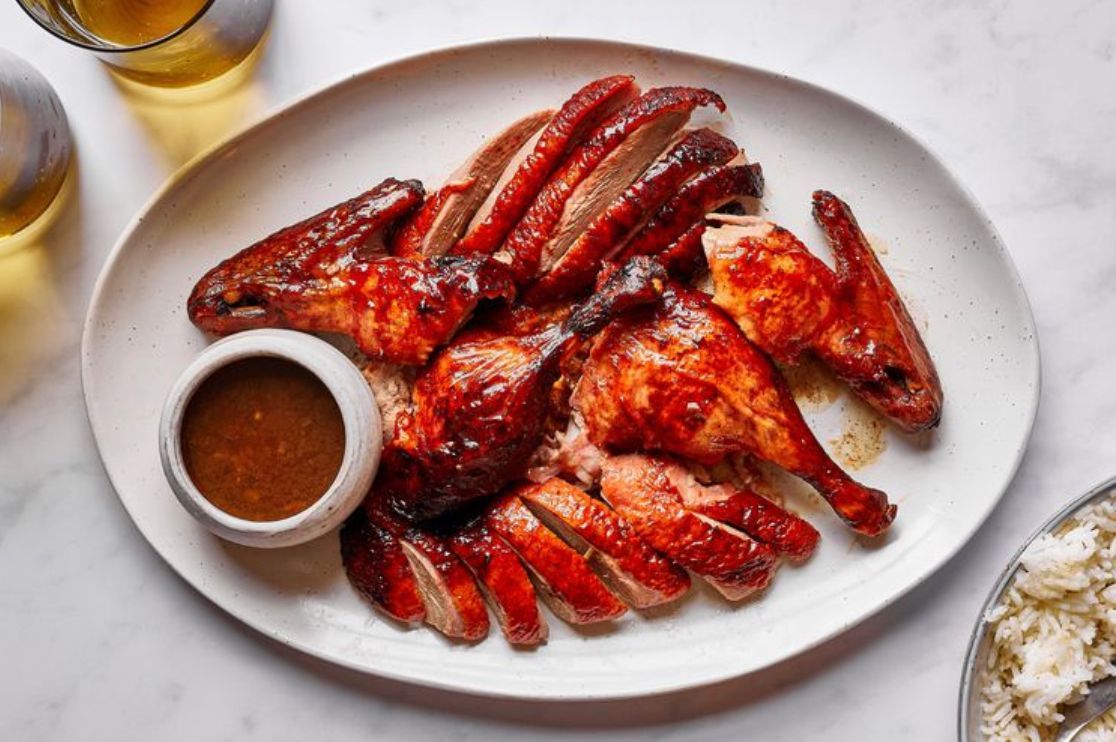
Weird! This was such a strange dish! This dish was so foreign to us. But actually, now that I think about it, I realise that this was a normal dish here. We were just not used to the British Chinese food. What is British Chinese food? The kind of food that comes Chinese chefs who prepare food for British clientele. It is Chinese food made for British tastes. The food was not foreign. We were foreign! We were the foreigners.
Two Groups of People
The passage for today focuses on two groups of people—those who were foreigners, and those who were not. The foreigners were called Gentiles. And the non-foreigners were the Jews, the people of Israel.
In many cultures, we have words that distinguish between those who are foreigners and those who are not. In Hong Kong, Westerners were historically called Gwailou 鬼佬—literally, ”ghost person.” This was probably because Westerners tended to have pale skin color, making them look like ghosts. When I was growing up, my parents taught me in my local dialect to call Westerners Laofan, or in Cantonese, Loufaan 老番—literally, “old barbarian.” I’m not sure which term is better—calling a person a ghost or a barbarian!?
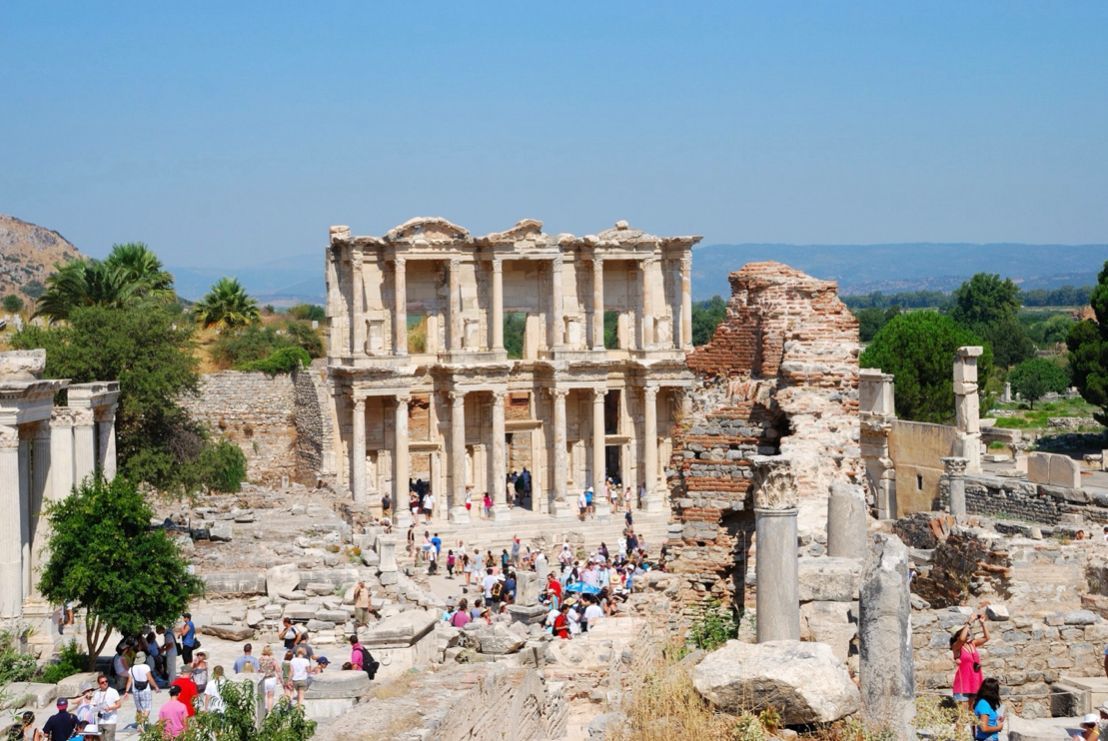
Back to our passage. We have Gentiles and we have Jews. Like I said, the Jews saw the Gentiles as foreigners. But the funny thing is, the Jews were actually the foreigners. This is the book of Ephesians. Ephesus was an ancient Greek city. So Jews in Ephesus would have been foreigners, because the Jews were coming from outside. The Jews had a different homeland—Israel. In fact, many of the Greek Ephesians would have called Jews using the Greek word barbaroi or, literally, “barbarian.” Jews were uncivilized barbarians. It is from the Greek word barbaroi that we get the English word “barbarian.”
The point here is that both the Jews and the Gentiles saw each other as foreigners. Yet when Paul was writing to this church, he was not just writing to Jews and Gentiles. He was writing to Christians. He was writing to Jews and Gentiles who had become Christians. They were Jewish Christians and Gentile Christians. And now they were part of one church and one group of Christians.
One New Man from Two
In our passage, Paul talks about the ways in which Jews and Gentiles have, for a long time, very much hated each other. The hatred was so strong, you could feel it whenever a Jew and a Gentile ran into each another in the public. It was almost as though there was an invisible wall separating them. You keep to your side; I keep to my side. Paul calls this a “dividing wall” or a “separating wall” (隔絕的牆). But something happened because of Christ’s sacrifice on the cross. Paul writes in Ephesians 2:14–16 (NIV):
For [Christ] himself is our peace, who has made the two groups one and has destroyed the barrier, the dividing wall of hostility, by setting aside in his flesh the law with its commands and regulations. His purpose was to create in himself one new humanity out of the two, thus making peace, and in one body to reconcile both of them to God through the cross, by which he put to death their hostility.
This is such a powerful passage. First, it says that Christ, who is our peace, destroys the dividing wall. But it doesn’t stop there. Secondly, it also says that Jesus creates a new humanity out of the two. He is bringing newness to the situation. But how is this possible?
Let's dig into this deeper. One of the key ideas here is found in this description of Jesus Christ as “our peace” (我們的和平).
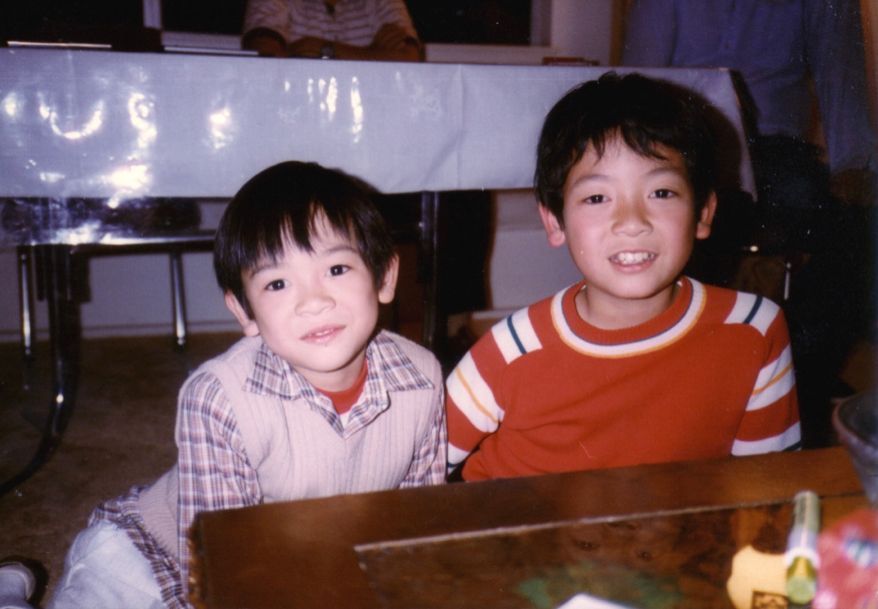
It is like when I was a child, and I would always get in fights with my older brother. My dad would scold us because all he wanted was peace and quiet. But the next day, we would fight again. We would fight again because the reasons why we fought were still there. We were fighting not just against one another. We were fighting because we were fighting for the same things. We wanted the better toy or the better clothes. We wanted more attention from our parents. We wanted to be our parents’ favorite child. Of course, I was the favorite child! So my brother wanted to fight me for that. And so the problem was never resolved. Because I was always the favorite! So there was never true peace.
But in this passage, Paul says that Jesus is our peace. This is not just the end of fighting. This idea of peace comes from the Hebrew word shalom. It is not just about the end of fighting. It is about the end of fighting so that something new could begin. It is not just about you staying on your side of the room, and me staying on my side of the room. It is about enjoying the room together—sharing it together. It is about being a whole, loving family together. It is when that happens that true peace is experienced.
I should clarify that even if Christ is there, the peace and unity is not always fully there. There is always still difference and fighting. But the peace has begun with Christ. And we are called to fight not against each other, but to fight for each other, and to fight for Christ in us. This is why the rest of Ephesians has Paul giving practical advice to the church about how to have peace and unity with one another.
Christ has already started this new work. And it leads to this second idea. Paul writes in verse 15: “His purpose was to create in himself one new humanity out of the two, thus making peace.” (“為要使兩方藉著自己造成一個新人,促成了和平”). Jesus doesn’t temporarily end the fighting between the two sides. Jesus is making one new people together.
No Longer Foreigners
We see Paul saying this again in Ephesians 2:19:
You are no longer foreigners and strangers, but fellow citizens with God’s people and also members of his household…
你們不再是外人或客旅,是與聖徒同國,是上帝家裏的人了…
No longer are Gentiles foreigners to Jews, and no longer are Jews foreigners to Gentiles. No longer are they enemies of one another. Now, they are a single group. A single religion. A single group of Christians. Now, they are a new people. Now they are all citizens of God’s kingdom. Now they are part of the same people and part of the same family.
When Paul was writing this verse, he had in mind another set of verses from the Old Testament. In Leviticus 19:33–34, God tells Israel that whenever there is a foreigner in their land, they are not to treaty them poorly. No, they are to treat them well. Actually, they are to love them as they love themselves. Treat them like a fellow citizen.
In fact, the chapter of Leviticus 19 is also where Jesus gets the teaching for the second greatest commandment: to love your neighbour as yourself. Christians aren’t just to love your neighbours or your foreigners. Christians are to love them as loving themselves. Christians are to treat them as one of your own.
Again, Ephesians 2:19 reads:
You are no longer foreigners and strangers, but fellow citizens with God’s people and also members of his household…
你們不再是外人或客旅,是與聖徒同國,是上帝家裏的人了…
No longer are you foreigners!
Conclusion
When Duncan invited me to come preach in your church, I knew immediately that this was the message that God wanted me to preach. What do you see when you look around your congregation? I see people who have come together from different parts of the world. I see difference in your midst. But I also see one people. You are one people. We are one people.
There are always differences in a community. We are all different from one another. Maybe some of us see each other as quite strange or maybe even quite foreign. But God is doing a wonderful work. Those who were once foreign are no longer foreign. We are all fellow citizens. We are all God’s people and God’s household.
At the same time, we each bring something unique because of where we come from. When I started the sermon, I talked about how the British Chinese food seemed so weird to me. It seemed so foreign to me. But as foreigners become citizens, something new is made. You start to feel at home. You start to like what is here.
Think of Hong Mong. In Hong Kong, there are many foods that were invented because foreigners made their homes there.

There is the Hong Kong-style Russian borscht soup 罗宋汤, that comes from Russian immigrants who first moved from Russia to China, and then left Mainland China in the 1950s to go to Hong Kong.
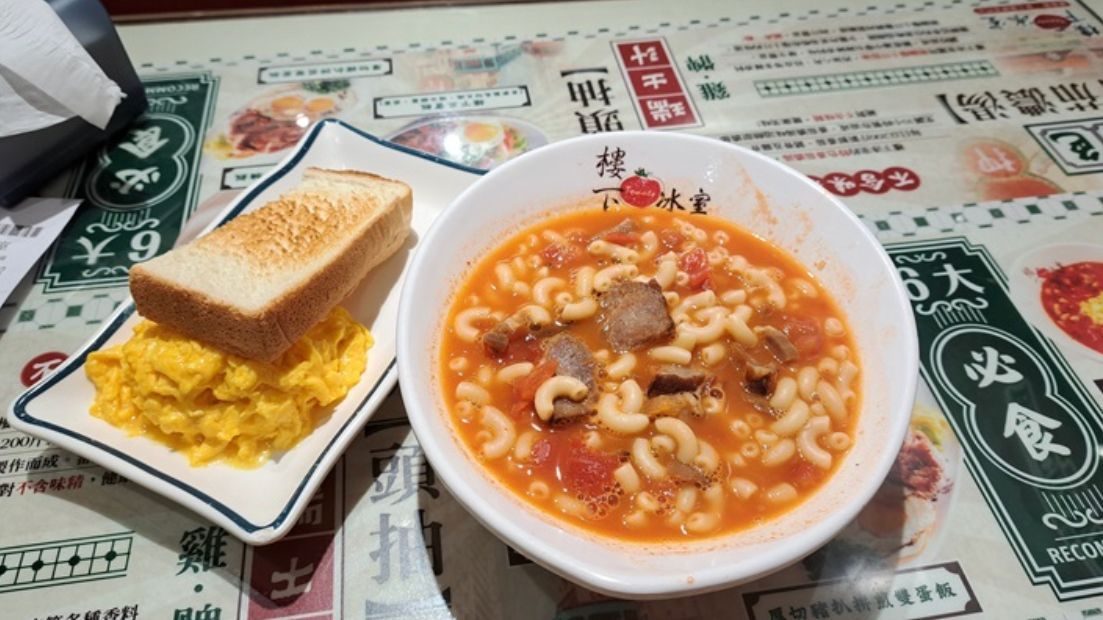
Or there is also the Hong Kong-style cafe 茶餐廳, which serves food that brings a fusion of Western and Chinese flavours and cooking styles.

Or there is my favorite dessert, Hong Kong egg tarts 蛋撻 that comes from the Portuguese who made their homes in Macau and made Portuguese egg tarts there, that were later made by locals in Macau and then in Hong Kong. See, when foreigners become welcome, and can contribute something new to what is already there. When they are made to feel at home, something new happens. Something new and beautiful and TASTY is made possible.
We must remember that this requires work. This requires work from everybody in the household. Yes, because of Christ, the dividing wall is gone and his peace is here. But as with the church in Ephesus, the church here in Corstorphine needs to work to bring out the peace and unity of Christ. There may be differences. There may be miscommunications. There may be challenges. But God calls us to work together, to be a household, and to be a people of God.
Through Jesus Christ, the two people become one people—one new people. One beautiful new household of God.
But it doesn't stop there. This same household is called to continue to welcome others in. While this same household is now a new home, it too is to love newer foreigners as yourself. This same household is called to continue to build God’s kingdom and God’s people.
By the grace of the Lord Jesus Christ, the love of God the Father, and the fellowship of the Holy Spirit, be working among you, now and forever more. Amen.